News

What Sugar Does To Your Teeth


There are all sorts of health benefits to cutting back on sugar. And although we’ve always known about the relationship between sugar and tooth decay, there’s increasingly more evidence about sugar’s connection with other health related conditions too.  High sugar diets increase the risk of obesity, diabetes and heart disease, as well as other, often complex health issues.

How does tooth decay occur?

Sugar works its magic by partnering with bacteria which live on the surface of our teeth.  There is a range of different types of bacteria and, depending on the individual, there are fewer or greater numbers of specific bacteria.  Interestingly, our oral microbiome, or community of bacteria, begins at birth and is strongly influenced by our mother’s oral health and her own bacteria during pregnancy.

Whenever we eat or drink something sugary, the bacteria on the surface of our teeth eat the residue of sugar and acid is formed.  This acid works like a microscopic extraction fan, pulling minerals out from the surface of the tooth.  Eventually, this weakens the enamel of the tooth and dental cavities form.

Once a tooth is decayed and filled, it is never as strong as it once was. There isn’t just a financial cost in restoring teeth, but also a biological cost as well which can have a lifelong impact.

How can I reduce my risk of getting dental cavities?

There many things you can do, but among the most important is to understand how important your role is in preventing decay in the first place. Whilst your dentist will be supporting you, their role builds on what you’re doing every day between visits.

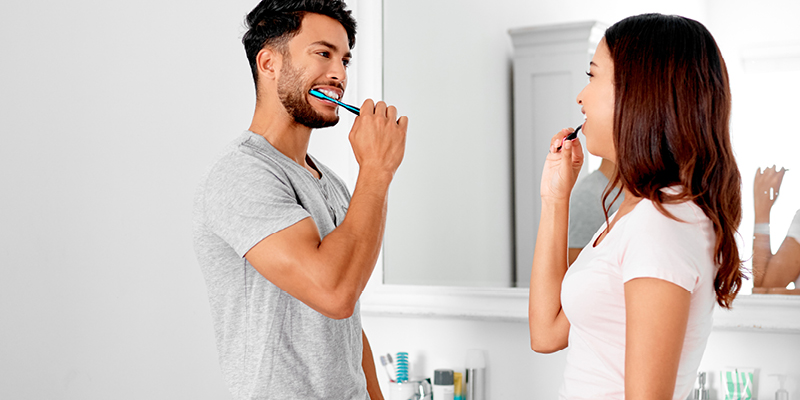
  • Brush your teeth at least twice each day and use fluoridated toothpaste.
  • Spit, but don’t rinse out the toothpaste. The fluoride it contains has a protective action on your tooth’s surface.
  • Brush your tongue well each day. A range of bacteria grow on the tongue. One of them, Streptococcus Mutans is a primary reason for dental decay.
  • Replace your toothbrush when it starts to look worn and shaggy, or every three months, whichever comes first. Remember, toothbrushes are a disposable item and need to be thrown away once they’ve reached the peak of their usefulness. A soft, small headed toothbrush with a flexible neck is ideal for reaching back teeth and small areas of a tooth’s surface.
  • Clean between your teeth at least once each day. Use dental floss and interdental brushes to remove food from between your teeth. Spend some time finding the style of floss and interdental brushes that suit your teeth. The spacing between adjoining teeth varies between us all and it’s important to use the right size brush and floss to do a thorough job.
  • Drink water between meals if you’re thirsty. Avoid drinking soft drinks, cordial, energy drinks or other carbonated fluids. Swish your mouth with water after snacking and drinking.
  • The World Health Organisation recommends we eat no more than a total of 6 teaspoons /24 grams of added sugar each day. One teaspoon of sugar = 4 grams.  Read labels of the foods you’re eating and check the amount of sugar per 100 grams. The Australian Dental Association says to aim for 10 grams or less of sugar per 100 grams.

Book an appointment to see your dentist regularly to maintain good oral health.  Small issues can easily become big issues.  It’s important to have your dentist monitor your teeth and give you individual support and guidance about preventative strategies.

I’ve got the munchies!

Every time we eat and drink, the sugar + bacteria = acid cycle happens again. Snacking is a good example of how eating frequency leads to repeated acid attacks. There simply isn’t enough time for the mouth to build up enough protective mechanisms to prevent decay from happening.

If you’re hungry and need a snack, reach for a glass of unflavoured milk, unsweetened yoghurt, nuts or crunchy vegetables like carrot sticks or celery. If you need a sweet treat, eat it in one sitting and then brush your teeth. This will help you to limit the acid = decay cycle.

Did you know?

Oral bacteria groups together and forms plaque, a sticky film which coats the teeth.  Plaque uses the sugar we eat as a form of energy and over time, plaque grows thicker and harder to remove. That’s one of the reasons why regular dental checks are important – to remove the build-up of plaque which tooth brushing alone cannot remove.

The Hidden Places You Wouldn’t Expect To Find Sugar


We’re all familiar with the look and taste of processed sugar. The granules we add to our tea and coffee and the immediate sweet taste from cakes and biscuits make it easy to recognise it as containing sugar. But sugar can come in many forms and it’s not always easy to detect its presence or how much we’re eating.

Aren’t sugars the same?

Yes, to a point. Though sugars can come in a ‘natural’ form as in fruit, vegetables and milk it is the added, refined sugars that are often added to the foods we eat, leading to us unknowingly consuming more sugar than we should be.  This can cause dental decay and when eaten in excess, lead to obesity and other health issues.

Foods which contain naturally occurring sugar such as fruit, vegetables and dairy foods, include other important nutrients and fibre so it’s important to keep these within your diet. The small amounts of sugar they contain are outweighed by the benefits.

It’s easy to overdo it with sweet foods and drinks because there’s often not the bulk of roughage to send a signal to our brain that we’re full and it’s time to stop. Foods you wouldn’t think to check for sugar can often be some of the biggest culprits of hidden sugar. Sauces such as tomato, barbeque, stir fry and pasta sauces often have added sugar. These hidden sugars often go un-checked when it comes to foods considered more savoury but are no less damaging to our teeth. Some breakfast cereals can contain 6 or more teaspoons of sugar and snacks such as muesli bars that are often considered healthy options can contain quite a bit of sugar. Even the mixers we combine with a relaxing beverage can be deceivingly high in sugar.

Foods high in sugar and added sugar generally don’t serve any nutritious purpose. We anticipate the pleasure we’ll get as they’re eaten, have a momentary sense of delight as they’re in our mouth but that’s it as far as their usefulness goes.

Where’s the sugar?

Sugar is one of the most common ingredients in processed foods. There are many reasons why, but it’s generally lower in cost to produce and consumers are drawn to buying food and drinks which taste good and make them feel better.

Sugar, along with fat and salt are considered the magical trinity of tastes and when combined in food, they trigger reward centres in our brain.  Sugar especially, can become addictive when it’s eaten in excess and not in a healthy combination with other, more nutritious foods.

Five tips about added or hidden sugar

  1. ‘No added sugar’ does not mean a food or drink is sugar free. Fruit juices are a good example of no extra sugar being added, but the contents still being high in sugar.
  2. ‘Added sugar’ refers to foods and drinks that have sugar added during processing, cooking and just before eating and drinking. Common forms of added sugars are brown sugar, maple syrup, rice malt syrup and sucrose (sugar).
  3. Hidden sugars are often disguised behind confusing names. Fructose, corn syrup, syrup, saccharose, glucose and dextrose are all commonly used terms which mean the same thing – sugar.
  4. The closer to the top of an ingredient list, the higher its concentration. Foods which note sugar as a first or second ingredient are best avoided.
  5. Sugars are commonly listed under carbohydrates on an ingredient list. If a word ends in ‘ose’ that means it’s a form of sugar e.g. sucrose, glucose, fructose.

How can I reduce my sugar intake?

  • Read labels of processed foods. If something already comes in a box or plastic bag from the supermarket, it’s likely to have been processed. Learn what’s in the food you’re eating and how much sugar is included.
  • Consider serving sizes and the amount of sugar you’re eating. The Australian Dental Association and World Health Organisation recommend that you aim for 10 grams or less of sugar per 100 grams and limit your sugar intake to 6 or less teaspoons per day – around 24 grams or less of added sugar.
  • Know the times you often crave something sweet and plan for healthy snacks. Fruit, dates, dried fruit, natural yoghurt with fruit added, nuts, cheese/crackers are all reasonable alternatives.

Remember

Sugar is a part of life for all of us and like many things, is fine in moderation. Avoid setting yourself unrealistic goals of not eating any sugar and think about when you’re eating it.  Look for balance and give yourself permission to enjoy the occasional treat.

Regular dental visits will help to ensure that any changes in your mouth or early decay can be detected sooner rather than later. Speak with your dentist about the changes you can make towards cutting back on your sugar intake.

Remember to brush, floss and repeat, at least twice a day, every day.

Seeing your dentist regularly can make a huge difference.

Book an appointment today to find out how.

What To Expect With Tooth Extractions and How To Protect Your Teeth Early


Unfortunately, there are times when the damage to a tooth is too extensive and a tooth extraction is needed. It will rarely be the first option for repair put forward and, in many cases, other options such as a filling or a crown may help you retain your tooth for longer. If and when the time comes for a tooth to be removed, there are often many questions which arise. Here are a few answers to give you peace of mind before your next dental visit.

Why would I need a tooth extraction?

The top 5 reasons that you may need an extraction are outlined below.

  1. Significant tooth decay or damage to the tooth
  2. Gum disease
  3. To improve appearance, in conjunction with orthodontic treatment
  4. Extensive tooth cracks, fracture or trauma
  5. Poor positioning or tooth functionality (e.g. impacted wisdom teeth)

A consultation with your dentist will help outline all that is involved with any of the above reasons for an extraction. Of course, if you are having regular dental check-ups you will already be aware of any ongoing issues with your teeth which may lead to the removal of a tooth in future.

What can you expect with a tooth extraction?

It’s important to note that not all tooth removals will be performed in the same way. Your dentist will discuss the best treatment options with you and will require an x-ray of the tooth concerned in order to view the root location and formation, as well as the density of the supporting bone before making a decision on the best tooth removal method for you.

The vast majority of tooth extractions are completed in the dental chair using local anaesthetics, however for more complex cases or where patients are highly anxious or phobic, alternative options such as intravenous (IV) sedation or general anaesthetic in a private hospital are available.

Your dentist will advise you about the complexity of the extraction taking into account your health, age, the location of the tooth and the complexity of the root formation when determining the best method of extraction for your tooth, and whether a referral to a specialist is required.

How much does it cost to have a tooth removed?

The cost of having a tooth removed (tooth extraction) can range from $180 and $400* depending on the complexity of the extraction and the need for any additional procedures.

This cost estimate does not include any consultation costs or x-rays that may occur as a part of the extraction appointment which will assist your dentist in determining the most effective extraction method for your circumstances.

Protecting your teeth early

The simple answer to reducing the chances of a tooth extraction is ongoing preventative dental care. Taking care of your teeth consistently will help prevent gum disease and cavities which can all lead to larger dental issues in future. This involves brushing twice daily and flossing as well as ensuring you attend regular 6 monthly check-ups with your dentist.

It’s also important to remember that accidents do happen and is one of the major causes of a tooth removal procedure. When you know you will be undertaking an activity that has a high chance of damage to your teeth such as sports, ensure you get fitted for an appropriate mouth guard by your dentist. It might just save your teeth in future.

If you think you might need a tooth removed contact your nearest nib Dental Care centre.


*Prices are indicative and may vary by practitioner. Tooth extraction complexity will also play a part in the final price. The price indicated does not include any consultation costs or x-rays that may occur as part of the extraction appointment.

Is Your Tooth Ache Caused By Cold Weather?


Ever felt your teeth ache on a cold day and thought it must be a coincidence? The reality is that our teeth can be affected by extreme cold or heat. This pain associated with cold weather often affects people who have similar sensitivities to cold or hot food such as ice-cream and hot and cold drinks.

How the cold affects your teeth

Temperature changes in the mouth from breathing in cold air, (or from cold and hot food and drinks) causes miniscule movement of fluid inside any area of exposed tooth dentine, which in turn stimulates nerves inside the tooth leading to sensitivity or pain.

Exposed dentine results from the loss of the enamel covering of your teeth. Enamel protects dentine, allows you to chew and prevents extremes of hot and cold temperatures reaching the nerves.

Enamel can be lost as a result of tooth decay, tooth wear from clenching or grinding or from chips and fractures of teeth. Tooth dentine can also become exposed if you have gum recession or suffer from gum disease.

Sensitivity or pain from teeth can lead to those winter months dragging out and have a negative impact on your life through a decrease in activities and lifestyle in an effort to avoid further dental pain.

What steps can you take?

There are some steps you can take to help you get through the winter months and protect your enamel without experiencing this pain.

  1. Use sensitive teeth toothpaste

Use a toothpaste that is specifically designed for sensitive teeth. It can help to brush at least half an hour before going outside. Your dentist will be able to recommend a brand that is best for you. To give the toothpaste the best chance of working, don’t eat or drink after brushing

  1. Use the right toothbrush

Use a soft bristled toothbrush and brush in a circular motion. It’s also important to brush gently in order to further protect the enamel on your teeth.

  1. Don’t use teeth bleaching products

Unless your dentist advises that its safe for your teeth to do so, teeth bleaching products can wear down enamel and increase sensitivity. If you’re already experiencing pain from sensitivity, this can only make matters worse.

  1. Teeth clenching

Over time this habit can cause further breakdowns in the enamel of your teeth. Speak to your dentist about options which may be available to help you with this

  1. Visit your dentist

Your dentist will be able to identify any areas of exposed dentine in the mouth and recommend options to fix the issues leading to sensitivity.

How teeth sensitivity impacts you long term?

Left untreated, sensitivity can continue to worsen, become more constant or even cause irreversible damage to the tooth. Additionally, there is often a negative impact on the quality of life of those living with pain. Ensuring your teeth are well cared for with regular brushing and flossing will help minimize any further damage. Speak to your dentist at your next check-up about additional options such as a fluoride or a desensitizing treatment. Your dentist may also recommend getting your teeth sealed to help protect them and decrease the pain you experience.

The Myths and Facts of Teeth Whitening


The benefits of being confident with your smile can not be underestimated. One way to be even more confident with your smile is through whitening your teeth. There are several methods available so understanding your options and how they impact your overall oral health is important.

Myth 1: Damage is caused from whitening teeth

While there are many over-the counter toothpastes, gels and strips readily available, it’s your dentist who is the best qualified to determine if your teeth will benefit from whitening. Our teeth naturally turn more yellow and darken as we get older so this should not be a major cause for concern in most cases. Your dentist will be able to determine the cause of any discolouration in order to provide advice on the whitening treatment that will be the most effective for you.

It’s important that you only seek to gain whitening advice and treatment from a professional who understands the full impact that this can have to your teeth. Incorrect use of bleaching products can in fact lead to irreversible damage to your teeth and gums. This includes any home whitening remedies (and we know there are many).

Incorrectly applying whitening treatments can also result in chemical burns to your gums, causing pain, blisters and discolouration. However, issues can still arise even when no injury occurs, often ending with uneven and lacklustre results.

Your teeth are precious, and you need them to last you as long as they possibly can, so although it can be tempting to DIY, treat your teeth well are and visit your dentist for their expert advice.

Myth 2: Teeth whitening can be painful

The teeth whitening procedure itself should never be painful. If you are experiencing pain at any point, it is could be your bleaching solution has been incorrectly applied and should be immediately removed. Visit your dentist to ensure that no permanent damage has occurred.

It’s important to note that some people do experience an increase in tooth sensitivity after a whitening treatment has been completed. This is often experienced when eating hot or cold foods for around 48 hours after the bleaching procedure takes place. If you do experience any severe pain, you should see your dentist as soon as possible.

Fact 1: Teeth whitening guided by a dentist is the best method

There are many nuances to our teeth. Your dentist is going to take into account all of these when recommending a whitening treatment for you. They will even consider your fillings, crowns and veneers which do not change colour with any whitening treatments.

In a lot of cases, a regular clean and polish will have a positive impact on the colour of your teeth through the removal of any surface stains. Your dentist can even replace any old fillings or veneers that can help to brighten your smile.

Getting whitening advice and treatment from anyone other than a dentist could lead to long-lasting, damage to your teeth.

Fact 2: Whitening by your dentist works better than DIY versions

This is in fact true. The strength of whitening solutions that a dentist is allowed to use is much higher than that of any DIY product available online and instore, meaning you will end up with better results than any of these products. Your dentist is also able to make recommendations specific to your teeth around timings for your treatment and the best ongoing after-care for your newly white smile.

Dentist-supplied take home whitening kits:

If you prefer the convenience of whitening your teeth alongside the comfort of your couch, your dentist also has whitening kits that you can take home. Your dentist will take an impression of your teeth to make custom fitted trays. Once home, you follow the instructions laid out by your dentist to achieve a bright white smile.

Whitening treatments in-chair:

A stronger bleach concentration can be used when getting your teeth whitened ‘in-chair’ at the dentist. The solution is applied by your dentist and is activated using an ultra-violet light or laser. The benefits of this type of treatment are often immediate. Your dentist will likely recommend the use of a take-home kit for a continued bright white smile.

If your Dentist lets you know that a bleaching treatment will not be beneficial for your teeth, ask them about the other types of things that can be done to help brighten your smile and boost your confidence. Book an appointment to find out more.


*Please note that many healthfunds (including nib) do not provide any rebates for tooth whitening or cosmetic treatments.