News

How to care for your teeth for all ages


People used to assume they would need to wear dentures as they aged, but now with a better understanding of the importance of preventative health and oral care, most of us have a great chance of retaining our own teeth as age.

Reducing the risk of extractions and restorative dental work requires a little effort and consideration. And although having dental checks is important, it’s the daily attention to our teeth and diet, in combination with regular dental expertise, which makes all the difference to our long-term dental health.

Kid’s teeth

Caring for your child’s teeth starts before they are even born, because once born, all 20 primary (baby) teeth have already begun forming in your baby’s gums. Your diet and oral hygiene will have a direct effect on the health of your baby’s teeth.  Healthy teeth habits start in childhood.  See your dentist at least once during your pregnancy and brush and floss daily to reduce the risk of decay and even premature birth. Clean your baby’s teeth as soon as they emerge through the gums and avoid offering your child sugary foods and drinks.

Kids aged 3-12 years

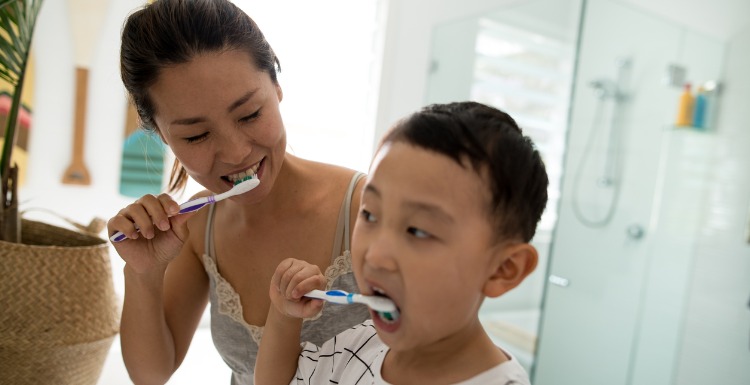
Your toddler will have all their primary teeth by the time they turn three.  Preventing decay in baby teeth is the first step towards retaining permanent teeth when they erupt between 6-12 years of age.  Always brush your child’s teeth until they’re around 8 years of age. Small children don’t have the coordination to do a good job of removing plaque from their teeth and need their parents help.  Use a low dose fluoride which will help to harden their tooth enamel and limit bacterial growth. As soon as two teeth are in contact with each other, floss in-between your child’s teeth as well as brushing with a small headed, soft toothbrush.

Adult teeth

By the early 20’s, all 32 adult or permanent teeth have usually erupted. There are no specific changes we need to make when caring for adult teeth, as long as good habits have already been established. Brushing at least twice each day with a fluoride toothpaste, flossing daily and eating a healthy diet all contribute significantly to good oral health. Our risk of decay does not lessen as we get older, though our teeth can be affected by hormonal as well as other physical conditions. Wear and tear are common with age.

Some adults experience uneven wear on their teeth due to grinding or clenching their jaw. Snoring or sleep apnoea can also influence the way the teeth align with each other. Wearing a mouthguard during sleep can make a big difference in protecting the integrity of the teeth and avoiding uneven wearing.

Top tooth tips over the ages

Brush and floss daily and always use a fluoridated toothpaste. And if you have children, role modelling healthy oral care habits can make a big difference in establishing healthy behaviours. Book an appointment today with your dentist.

References

Life Stages Health (colgateprofessional.com.au)

Oral health and dental care in Australia, Healthy teeth – Australian Institute of Health and Welfare (aihw.gov.au)

Oral Health For Infants And Toddlers (colgateprofessional.com.au)

Oral Health For Teens And 20s (colgateprofessional.com.au)

Should I be afraid of having a root canal done?


Although the thought of having a root canal treatment can cause many of us to break out in a cold sweat, having a root canal done is generally painless and offers a solution to a problem. Root canal therapy is complex and requires a great deal of skill and attention to detail.  This is why your dentist will take time to discuss and plan your treatment options.

Why would your dentist recommend a root canal treatment?

  • decay forming underneath existing fillings
  • excessive tooth wear from grinding, clenching or erosion from dietary acids
  • cracks or fractures in teeth
  • accidents or trauma that damages a tooth
  • advanced gum disease (periodontitis)


How is a root canal treatment performed?

Root canal therapy, also called endodontic treatment, involves the removal of bacteria and infection from the centre of the tooth know as the dental pulp. This is a group of tissues consisting of connective tissues, blood supply and nerves which extend into the tooth roots. When the dental pulp is damaged, bacteria can multiply inside the tooth.  Left untreated, this leads to pain, infection or an abscess forming.

Having a root canal treatment starts with a careful dental examination and X-ray of the affected tooth.  This is important for your dentist to see the shape of the root canals and check if there is any infection present in the bone around the tooth.

Step 1 – A local anaesthetic is given to numb the tooth and surrounding tissue. A dental dam is often used, this helps the tooth to stay clean and dry from saliva.

Step 2- The dentist prepares the tooth so that the infection can be cleaned from the centre of the tooth and from the central canals within the roots of the teeth. There can be 1 or 2 root canals in the front teeth and 3-4 root canals in the back teeth.

Step 3 – Once the root canals have been cleaned and sterilised, they can be permanently sealed with a special material called ‘gutta percha’.

Step 4 – A tooth that has undergone root canal treatment is often weaker than an intact tooth. A strong permanent cover known as a dental crown is often required to allow the tooth to be safely used during chewing and eating and provides long term protection from further breakdown.


How could you feel after a root canal?

People commonly describe a sense of relief after the procedure. Once the infection and dental pulp are removed, the tooth does not have any sensation of hot/cold or pain.   Mild pain relievers after the procedure can help to relieve any temporary discomfort. Your dentist will guide you on ways to relieve any pain.

References

Are Root Canals Painful? A Simple Question With A Complex Answer (colgate.com.au)

Root canal treatment | healthdirect

Step-By-Step Guide To Root Canal Therapy | Colgate® Oral Care

What you need to know about toothpaste and its myths


Although toothpaste may be caught up in the lifestyle and wellness industry, it is important that we are cautious when buying toothpaste and that our choices are not centred around how a tube looks or smells, but rather, its content.  Because what’s inside the tube and the way it helps keep our teeth and gums healthy is the top priority.

What to consider when choosing your toothpaste

Today’s market is flooded with toothpaste choices. Everything from all natural, to charcoal and fluoride-free to exotic flavour combinations can lead us down the path of making a toothpaste choice that may not be the best choice to keep our teeth and gums healthy.

With gorgeous packaging and often a high price to match, this is one product where price may not be the best indicator for how it will perform in keeping our smiles smiling.  Knowing the key elements of what you should be looking for in a toothpaste will assist you in cutting through the selection on the shelves and making the best choices for your oral health. The Australian Dental Association recommends that we utilise a toothpaste containing fluoride. This is the key ingredient to look for when making your toothpaste choice as it actively helps fight tooth decay.

Whilst there is some concern about the consumption of fluoride itself, studies have shown that the very low doses of fluoride contained in toothpaste coupled with the fact that we do not ingest it, makes fluoride very safe. For young children who may at times swallow toothpaste, there are lower doses of fluoride contained in children’s toothpaste.

How to lower your risk of tooth decay:

  • Use a good quality, fluoridated toothpaste every day. Buy products bearing the Australian Dental Association (ADA) Seal of Approval .
  • Drink fluoridated water, rather than bottled water. Fluoride helps to remineralise teeth where the enamel is weak and prone to decay. Fluoride also slows the activity of bacteria in the mouth to reduce the risk of tooth decay.
  • Brush twice a day with a soft, small headed toothbrush. This helps to remove food and plaque from teeth. Tongue brushing also helps to reduce bacteria from multiplying.
  • Floss daily to remove food, bacteria and plaque from between the teeth. Flossing helps to prevent decay and maintain gum health.
  • Consume a diet low in refined sugar and acids
  • Have regular dental visits – ideally every six months which helps to provide early detection of tooth decay and address problems when they are easier to manage and often cheaper to treat.


You can make better toothpaste choices

A few simple guidelines to help guide you

Read toothpaste labels and become familiar with the product information and what it means. Make sure fluoride is included – as Stannous Fluoride or Sodium Fluoride or, a combination of both. The fluoride in toothpaste is in small, safe concentrations.  It is high enough to be beneficial but not to cause harm. Fluoride doses are monitored carefully by manufacturers to ensure consistency and therapeutic value.

Choose a toothpaste for sensitive teeth if you have issues.  Sensitive toothpastes work by desensitising nerve endings of the teeth and can be very effective when used regularly.

If you have children aged between 18 months and six years, brush their teeth using a children’s toothpaste.  These have a lower concentration of fluoride than adult toothpaste. Remember to only use a small amount – a pea-sized quantity is enough. Encourage your child to spit out and not swallow the toothpaste. What’s left on their teeth will have a protective effect.

The one thing you can do to maximise the beneficial effects of toothpaste is NOT to rinse your mouth with water immediately after brushing and avoid eating or drinking for 20 mins. Toothpaste works by being absorbed into the tooth so it’s essential to give that process time to occur. It’s very much like putting on sunscreen and immediately going for a swim – the protective effect is diminished compared to leaving it for 15-20 minutes to do its magic.

Speak with your dentist about what toothpaste is right for you. Some people need a specific type of toothpaste to meet their oral hygiene needs.  Book an appointment to have your teeth checked.

References

https://www.ada.org.au/Dental-Health-Week-2020/Oral-Health-for-Busy-Lives/Brushing-and-flossing

Kids – Your Dental Health | Australian Dental Association (ada.org.au)

Policy Statement 2 (ada.org.au)

Seal of Approval – Your Dental Health | Australian Dental Association (ada.org.au)

How stress can affect your dental health


Some degree of stress is normal and healthy for all of us. Stress helps to motivate our behaviour and achieve tasks throughout the day.  At some point though, when stress levels increase, they change from being helpful to potentially causing damage. The current COVID-19 pandemic has affected us all in many ways, including having a potential impact on our oral health and the forces we place on our teeth from stress. Tooth grinding, also called bruxism, is a common habit which often increases during stressful periods.  Similarly, tooth clenching is often associated with stress.  Many dentists are reporting an increase in the number of patients they are seeing with damage to their teeth as a result of stress and bruxism.

How would I know I’m grinding my teeth?      

Bruxism can occur during the daytime or during sleep, when we may not always be aware we are doing it. The damage from excessive forces on the teeth and jaw joints from bruxism can range from muscular tenderness and cheek biting through to acute pain, cracked or chipped teeth, broken fillings, jaw pain headaches or even a complete fracture of tooth requiring its removal. Longer term negative effects on teeth from bruxism include tooth wear and loss of tooth enamel and dentine or irreversible irritation of the nerve inside of the teeth requiring more advanced dental treatment such as root canal therapy and crowns.

Temporomandibular joint (TMJ) syndrome is a chronic disorder which can result from too much pressure on the joint connecting the jawbone and the skull. Tightening the muscles, clenching the teeth and grinding contribute to TMJ pain. Book an appointment with your dentist today for an assessment.

What can I do to protect my teeth against stress?

How you take care of your mouth and teeth is the most important factor in reducing your risk of tooth damage and decay. While brushing and flossing regularly won’t directly reduce the impact of stress, they will support your overall oral health.  Having regular dental checks can help to detect and monitor any changes to the health and integrity of your teeth. Your dentist will also be able to guide you in recognising early signs of stress on your teeth and ways to reduce tension in your face and mouth. Your dentist may also recommend preventive treatment such as mouth guards or even help from a physiotherapist to reduce muscular tenderness.

Consider how your body responds to stress and the conscious as well as unconscious ways you are managing tension. Awareness is often the first step towards making positive changes.  Changing your behaviour through relaxation strategies may take some time, but it will be very beneficial.

Tips to reduce stress related tooth damage

There are a number of things you can do to help reduce your risk:

  1. Avoid chewing on hard foods and never use your teeth as ‘tools’ to open packages or containers. Ice, pork crackling, nuts, hard lollies and uncooked popcorn can damage your teeth.
  2. Be mindful of daytime tooth grinding and triggers which cause you to clench your teeth.
  3. Practice mindfulness exercises and deep breathing if you’re feeling stressed. Regular exercise can be a helpful way to reduce stress.
  4. See your GP about any underlying sleep disorders like sleep apnoea.
  5. Speak with your dentist about wearing a night guard to stop tooth grinding.


References

https://bitemagazine.com.au/new-us-survey-finds-stress-related-dental-conditions-continue-to-increase/

https://www.colgate.com.au/oral-health/bruxism/how-to-stop-grinding-teeth-at-night

From crowns to bridges- understanding major dental treatments


A common goal of dental treatment is to restore the appearance and function of teeth so that they work harmoniously with each other. Teeth have a direct influence on the way we bite, chew and talk as well as how we look. When teeth are damaged or missing, it can result in pain or have a flow-on effect to other areas of our life. It can be impossible to restore the function of teeth that are moderately to extensively damaged with fillings alone and more complex dental treatment becomes necessary. Depending on the individual problem, more advanced dental treatments can help to permanently replace missing teeth with artificial teeth or strengthen and cover existing teeth, so they are protected against further damage.  Dental treatments can also improve the appearance of the teeth and impact self-confidence. Book an appointment with your dentist for guidance on what the best option may be for your dental treatment.

What is a dental crown?

Dental crowns, also commonly known as crowns or caps, are custom made restorations that are placed over weakened, damaged or broken teeth to restore their strength, shape, size, and appearance.

Crowns may be required:

  • To protect or prevent teeth that have been weakened by extensive tooth decay from breaking further
  • To support a tooth that has cracked or crazed with multiple fine cracks present
  • To repair an already broken or severely worn tooth
  • Where there is not enough sound tooth structure remaining to support a conventional filling
  • To protect an extensively restored tooth
  • To cover and improve the appearance of misshapen or severely discoloured teeth
  • To strengthen and seal teeth after root canal treatment
  • To restore a dental implant
  • To help hold a replacement tooth as part of a dental bridge


Crowns are commonly made from tooth coloured porcelain or ceramic, though they can also be manufactured from gold or other metal alloys where extra strength is required in the case of patients who may be tooth clenchers or grinders.

What is a dental bridge?

A dental bridge may be recommended when there is one or more teeth missing.  Bridges span the gap caused by missing teeth and help to keep the remaining teeth in their correct position. A special dental cement (adhesive) is used to anchor and attach a bridge to the teeth (or implants) at both ends of the gap. Replacement teeth are attached to the bridge and colour matched to the surrounding teeth.

What is a dental implant?

A dental implant is an artificial tooth root made from titanium to replace a missing tooth or number of teeth within the jawbone. Titanium implants are inserted into the space in the jawbone left by a missing tooth. A dental crown or bridge can then be attached to an implant. Dental implants are suitable for most healthy adult patients who have good oral hygiene, are free from gum disease and are ideally non-smokers. Implants can only be placed when the jaw has stopped growing and as such are generally not suitable for patients younger than 18 years of age.

What’s important to understand about dental treatments?

Any dental treatment involves careful planning and can include multiple visits. Your dentist will discuss all suitable options with you, including their advantages, disadvantages, alternative options and costs so that you are able to make an informed decision about your dental care. Dental bridges, crowns and implants are designed to last for many years, as long as your oral care at home is well maintained to care for them.

Caring for your teeth starts by:

  • Toothbrushing twice daily with a fluoridated toothpaste and flossing daily. This includes brushing the bridge/crown/implants.
  • Having regular dental visits and wearing the implant to appointments so its position can be checked.
  • Avoiding biting on hard objects like pencils or ice-cubes and not chewing sticky, hard foods.

References

https://www.colgate.com.au/oral-health/bridges-and-crowns/what-are-dental-crowns-and-tooth-bridges

https://www.colgate.com.au/oral-health/implants/what-are-dental-implants

https://www.healthdirect.gov.au/dental-bridge-procedure