News

Accessing your superannuation for dental treatments


It is possible to use superannuation (super) funds to pay for medical and dental treatments. This option fits into an arrangement with the Australian Taxation Office (ATO) and is called ‘Compassionate Release of Superannuation’. This program can be a solution for people who would otherwise not be able to afford medical or dental expenses, and who don’t qualify for treatment in the public health system.

Each superannuation fund has their own rules, however, most have an option for early access to pay a lump sum to cover out of pocket expenses for dental treatments for members and even their family members.

For many individuals, being able to access money held in their super fund can mean the difference between receiving early, timely treatment or not.

Criteria need to be met to qualify for the release of super funds

Generally, there needs to be proof that dental care is needed to treat immediate conditions which are causing pain and distress. Where there is a risk of problems becoming more complex, or there is a risk of further complications, paying for treatment with released super funds can be a workable solution.

Dental treatment is included in the category of medical treatment which cannot readily be accessible through the public health system.

Early release requires certification (proof) by either:

  1. Two dental practitioners – one must be a specialist.
  2. A general practitioner (GP) and a dental practitioner or a dental specialist.

Dental treatments covered by the scheme need to be considered necessary:

  • For a life-threatening illness or injury.
  • To alleviate acute or chronic pain.
  • To alleviate an acute or chronic mental illness.

 Eligibility for early release of super funds is dependent on:

  • Not having health insurance or sufficient level of health insurance to cover the required procedure.
  • Not being able to afford the procedure.
  • You or a family member having sufficient superannuation funds.

Can I use my superannuation for dental work?

Applying for early release of superannuation funds may be the only way you may be able to afford major dental work.  This is not a decision to be made lightly and should only be considered once all your other financial options have been explored.

Speak with your superannuation fund to fully understand what the implications may be. If you’re applying for early access to your super on grounds of severe financial hardship, this is not managed by the ATO.

Superannuation balances are intended to assist with living expenses after retirement. If you have not reached your preservation age, generally between 55 – 60, you will need to pay tax on the amount you withdraw.  There could also be payment alternatives which you haven’t considered.

Book an appointment with your dentist today to discuss payment options.
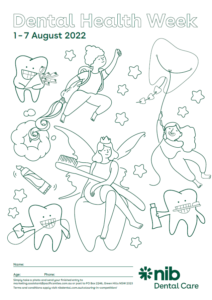
Colouring-in Competition 2022

Dental Health Week 2022 Love your teeth!

To celebrate Dental Health Week 2022 we would like to give all kids the opportunity to win an electric toothbrush and show their teeth some love. Download and enter our Dental Health Week colouring-in competition for a chance to win.

Running from 1-7 August, Dental Health Week provides us with the perfect opportunity to remind you to book your whole family in for their regular dental check-ups. Regular check-ups are important to help identify early signs of tooth decay and reduce major dental work down the track. Our centres are open weekends and extended hours with appointments available to support your dental needs. Book an appointment at your local nib Dental Care Centre.

Dental Health Week Colouring-in Competition


Terms and Conditions:

  1. Instructions on how to enter this promotion form part of the terms and conditions of entry. By participating in this competition, entrants agree to be bound by these terms and conditions.
  2. The promoter is Pacific Smiles Group Limited (ABN 42 103 087 449) of 6 Molly Morgan Drive, East Maitland NSW 2323.
  3. Entry is open to all Australian residents aged 18 years and under. Employees (and their immediate families) of the Promoter and its related companies are not eligible to enter.
  4. The promotion commences at 12:01am AEST on 23rd June 2022 and closes at 11.59pm AEST on 7th August 2022 (Promotion Period).
  5. To enter, Eligible Entrants must complete step 6 during the Promotion Period. Incomplete, illegible, or indecipherable entries will be deemed invalid. One entry per person is permitted. By entering this promotion, you agree to receive information and marketing communications via email, mail, or phone.
  6. Entrants must upload an image of their completed colouring sheet and email to [email protected] or send by post Attention: Marketing, PO Box 2246, Green Hills NSW 2323. Only one entry per person will be accepted.
  7. The Promoter reserves the right to verify the validity of entries and to disqualify any Eligible Entrant whom the Promoter believes either has tampered with the entry process or has submitted an entry otherwise than in accordance with these terms and conditions of entry.
  8. The Promoter will not be held liable for any failure of receipt of entries. The Promoter takes no responsibility for any entries which are lost, delayed, illegible, corrupted, damaged, incomplete, or otherwise invalid.
  9. Winners will receive a Colgate ProClinical Electric Toothbrush valued at $37. There will be 5 prizes given away across all age groups.
  10. The prizes are as stated, and no cash or other alternatives will be offered. The Prize cannot be used in conjunction with any other special offer. The prize is not exchangeable, transferable or redeemable for cash. If the Promoter is unable to supply the nominated prize, the Promoter reserves the right to supply another prize of greater or equal value.
  11. The winners of the prizes will be notified on 8th August 2022 via telephone, then by email if no response.
  12. In the event that the prize is not claimed by 11:59pm AEDT on the 12th August 2022 the judges will select an alternate winner. In the event that the alternate winner does not claim their prize by 11:59pm AEDT on the 19th August 2022 then the prize will be forfeited by the winner and neither cash nor any other prize will be awarded in lieu of that prize.
  13. Eligible Entrants agree, at the Promoter’s request, to participate in any promotional activity (such as social media posts) surrounding this promotion or the winning of any prize. Eligible Entrants agree that they will not be remunerated for this participation. Eligible Entrants consent to the Promoter, its respective officers, employees, agents and associated companies using their name and image in any media in perpetuity, without limitation and without compensation to the Eligible Entrant.
  14. To the fullest extent permitted by law and without limiting any other conditions of entry, the Promoter may, in its discretion, terminate, modify or suspend the promotion. All Eligible Entrants participating in the promotion at the point of termination, modification or suspension of the promotion will be notified by the Promoter in writing. In the event of modification or suspension of the promotion, the Eligible Entrant may choose to terminate their participation in the promotion at no cost.
  15. Details from all entries, including an Eligible Entrant’s personal and contact details, will be collected and used for the purposes of conducting this promotion (which may include disclosure to third parties for the purpose of processing and conducting the promotion) and for publicity purposes surrounding this promotion. By entering this promotion Eligible Entrants consent to the use of their information as described. Eligible Entrants may access and/or change their data by following the procedures in the Promoter’s privacy policy which is available at https://www.pacificsmilesdental.com.au/privacy-policy.
  16. Failure by the Promoter to exercise any of its rights contained within these terms and conditions at any time does not constitute a waiver of those rights.
  17. Dental services are provided at nib Dental Centres by independent Practitioners. nib Dental is owned and operated by Pacific Smiles Group Limited ABN 42 103 087 449.

Wisdom teeth – where, why and why not?


Wisdom teeth is the common name for the third adult molar teeth.  They’re generally the last teeth to erupt – at around 18-25 years of age.  Wisdom teeth are situated at the very back of the mouth and although most people have four, it’s not uncommon for only one, two or three to appear.

The issue with wisdom teeth is that they are often impacted and don’t fully emerge through the gum into their correct position.  This is generally caused by a lack of space in the jaw, so wisdom teeth may only partially erupt and be sitting at an angle, putting pressure on the tooth in front and nearby bone.

Impacted wisdom teeth

Impacted wisdom teeth can cause a range of problems, most commonly pain but also infection, ulcers and cysts to form.  Another common problem is for food to become caught in the tight spaces under the flap of gum if the tooth has not fully erupted.   Trapped food increases the risk of decay and can cause bad breath and an unpleasant taste in the mouth.  Bacteria which has built up can also lead to inflammation and a continual low-grade infection.

When wisdom teeth are impacted, or there is a risk of complications developing, removal (extraction) is often recommended.

Removing wisdom teeth

Wisdom teeth can be removed by a general dentist or a dental specialist e.g., an oral surgeon or maxillofacial surgeon. Removal can also be done in a dental surgery or in a hospital, depending on how complex the removal is likely to be. Most upper wisdom teeth can be removed easily under a local anaesthetic.  However, lower wisdom teeth are more likely to be impacted and more difficult to remove. Most commonly, when wisdom teeth are removed in a surgery, local anaesthetic is used. When removal is likely to be more complex and a general anaesthetic is needed, this is done in hospital.

What happens when a wisdom tooth is removed?

Once the anaesthetic is working, the gum is cut around the tooth to uncover it. Special instruments are used to remove the tooth from the surrounding bone. If necessary, the tooth may be divided into portions so it’s more easily extracted.

What happens after a wisdom tooth is removed?

Complications are not common, though some swelling and discomfort is normal for a few days afterwards.  Like any other surgery, there is a risk of bleeding, infection and nerve damage.  Careful attention to oral hygiene with mouthwashes helps to reduce the risk of infection.  Antibiotics are often prescribed before and after wisdom teeth are removed.

How would I know if I have a problem with my wisdom teeth?

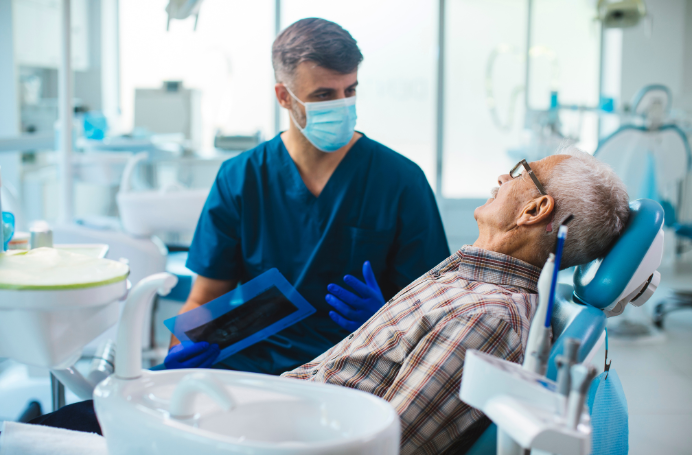
Be guided by your dentist who will examine your mouth and may order an x-ray. You may need an OPG X-ray, which will display all your upper and lower teeth on one single film.    If your wisdom teeth have not yet erupted, or are only partially visible, an x-ray will help to see their position, the shape of the roots and where the tooth is positioned in relation to other important facial structures and nerves.    However, every person is unique and wisdom teeth don’t always cause problems. If wisdom teeth are coming through in the right position and only causing slight tenderness, over-the-counter analgesia is often helpful.    If they are, removing impacted wisdom teeth is the most common solution. Book an appointment with your dentist today to have your teeth checked.


References

https://www.ada.org.au/News-Media/News-and-Release/Latest-News/Wisdom-teeth-To-remove-or-not-to-remove

https://www.dentalhealth.org/wisdom-teeth

https://www.healthdirect.gov.au/surgery/removing-wisdom-teeth#:~:text=Lower%20wisdom%20teeth%20can%20be,your%20tooth%20with%20a%20drill.

https://www.nationaldentalcare.com.au/article/how-do-i-know-if-i-need-my-wisdom-teeth-removed

https://www.nationaldentalcare.com.au/treatments/wisdom-teeth-removal

https://www.teeth.org.au/wisdom-teeth


Love your teeth – and they’ll love you back!


The relationship we have with our teeth can be one of the longest and most beneficial we have, so it’s worthwhile taking the time and energy to invest some care and attention so we can keep a healthy smile for life. Read on to understand more about what you can do to maintain good oral health.

  • Be an advocate for your teeth. Take a moment to consider what they would say if they could talk for themselves. A clean environment, good nutrition and avoiding harm would be high on their priority list.
  • Brush for two minutes, twice a day with fluoride toothpaste to keep your teeth healthy and clean. Avoid rushing when brushing, take your time to remove food debris so bacteria don’t have as much opportunity to multiply.  Remember, saliva flow slows down during sleep so it’s really important to do a thorough job of tooth brushing before going to bed at night.  Don’t forget to brush your tongue as well!
  • Use a soft, small-headed toothbrush that can reach all surfaces of your teeth. Replace your toothbrush every three months and when you’ve recovered after being sick. If you struggle to use a manual toothbrush, invest in an electric one. Follow the manufacturer’s or your dentist’s instructions on how to use this properly – just like a manual brush, electric toothbrushes still need sufficient time to work effectively.
  • Clean between your teeth every day by using floss or interdental brushes. Some people like to use a combination of both, or even a water flosser. Just remember to be gentle.
  • Keep a toothbrush, toothpaste and floss at work and take a couple of minutes after lunch to invest in your mouth. There’s something very refreshing and a little energising about toothbrushing midway through the day. Not to mention the social aspects of having fresh breath.
  • Become familiar with the look and feel of your teeth, tongue and gums. Don’t ignore toothache in the hope that it will just go away. Pain is generally a sign of problems and always needs checking. Make an appointment with your dentist if you have a toothache, or if there are any changes in your teeth or mouth.
  • Eat a healthy and well-balanced diet that is low in sugar and refined products. All forms of sugar can be damaging to teeth, not just what’s in sweets and sugar crystals. Fruit juice, muesli bars, energy and soft drinks, and even sauces can all contain high amounts of sugar. Get into the habit of reading information panels on food and checking how much sugar is contained.
  • Visit your dentist regularly, at least once each year, or as often as recommended. Your dentist will be able to guide you on preventative strategies to maintain your oral health and treat any problems before they become more complex.  Sometimes early detection by dental professionals is the only way to know about oral health changes.
  • Drink plenty of water, especially if you’ve had a respiratory infection. We all tend to ‘mouth breathe’ when we have a blocked nose, which can impact the protective benefits of saliva. Sips of water can help to keep the mouth healthy.

Speak with your dentist and book an appointment today to find out more about how to share the love with your teeth.

References

Dental Health Week – Australian Dental Association (teeth.org.au)
Home Page (teeth.org.au)


What are my options with cosmetic dentistry?


Over the last few years, cosmetic dentistry has come a long way.  Alongside preventative oral health and restoration, dentists use their expertise to improve the look (aesthetics) of our teeth and enhance our smile.  Depending on what is needed, cosmetic treatments help to lighten, straighten, reshape or repair teeth so they look more natural and intact.  Often, a combination of treatments is done over a period of time and a series of dental appointments.

Cosmetic dentistry includes veneers, crowns, dental bridges, dental implants, tooth whitening and tooth-coloured fillings.

When cosmetic changes are being planned, dentists will ensure that the upper and lower teeth work in harmony to reduce the risk of long-term damage for longer lasting results. Dentists generally work in partnership with dental technicians who make implants, veneers and dental bridges to suit individual needs.  Innovations in dentistry has meant that the majority of cosmetic and restorative procedures can now be carried out in-house that would have in the past required more costly external referrals.

Veneers

Veneers are made from thin slices of porcelain or resin and are designed to sit precisely over the surface of the teeth, similar to the way a false fingernail fits over a natural nail.  A thin layer of the tooth’s enamel is first removed so the veneer can be bonded to the tooth. Veneers are often used to create an even, symmetrical smile, especially to the front teeth which are seen more when smiling and talking.

Dental crowns

A dental crown is a covering for an existing tooth and improves the look of a tooth and the way it works.  They also help to protect teeth which are weak or may have broken. Crowns can be made of gold, metal or ceramic, depending on where it is placed in the mouth and how strong it needs to be.  Crowns can also be needed when too much of the original tooth is missing or after root canal treatment.

Dental bridge

A dental bridge is a permanent solution for people with missing teeth and who would prefer not to wear dentures. Bridges work by attaching a false tooth in between two crowns on the teeth either side of the gap created by the missing tooth (or teeth). Bridges can be made from ceramic materials or ceramics that are bonded to a metal substructure for added strength.

Dental implant

A dental implant is another solution to replace a missing tooth.  Implants are made from titanium, and form a ‘root’ or anchor in the jawbone to attach a crown, bridge or even stabilise full dentures.  Once a restoration is placed on the implant, it is permanent and looks and works like a natural tooth.  Dental implants are considered to be one of the best dental options because they work more like a natural tooth. If they’re looked after, dental implants can last for a lifetime.

Tooth whitening

Tooth whitening helps to remove stains and discolouration from teeth, making them look whiter. Peroxide is the common ingredient used in whitening products and works by increasing oxygen into the tooth enamel, causing it to lighten.  Treatments can be done during dental appointments, or at home using a purpose designed tray which keeps the whitening product in contact with the teeth.

White fillings

For around 150 years, amalgam has been used as a dental filling material.  Although the materials used in amalgam fillings are hard, many people don’t like their appearance and are concerned about potential health risks. White, or resin fillings have become a commonly used alternative because they can be matched to the shade of the tooth.

Remember

Oral hygiene is important throughout life, including when cosmetic dentistry has been done. Many cosmetic dental treatments last a lifetime if they are cared for with daily brushing and flossing. Speak with your dentist about what is right for you. Book an appointment today.