News

Do you know everything about the tooth fairy?

nib tooth fairy envelope


 Download your Tooth Fairy items here


We know the arrival of a lost tooth can happen quickly, so we wanted to ensure you have easy access to everything you need for a visit from the tooth fairy. So please find below your free, printable downloads of tooth fairy-related products by clicking on the images. We have worked closely with the tooth fairy to develop a perfect tooth-sized envelope and a letter and certificate from the tooth fairy.

Everything you need to know about the tooth fairy

Most of us had a few visits from the tooth fairy when we were small. Their visit when we were sleeping was usually acknowledged by a coin left in exchange for the lost tooth. As adults, the idea of losing a tooth is not such a joyful idea, though as children, losing baby teeth is one of those developmental stages which can be something to celebrate.

In the Middle Ages, superstitions were associated around baby teeth and their correct disposal so the child could be protected from witches in the afterlife. The modern interpretation is a little less scary and has been traced to a 1908 Chicago newspaper article relating to household hints. This offered guidance to mothers on the ideal way to encourage a ‘refractory child’ to allow a loose tooth to be removed.

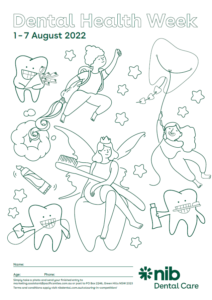
Most countries and ethnicities have their own version of how the tooth fairy tradition evolved, though many of us have an image of the tooth fairy being female, pixie like and waving a magic wand. Of course, she has a radiant smile and if we were to meet her, would be the perfect source of information about baby teeth and how to care for them.

5 fun facts about the tooth fairy

  1. In Japan, the tradition is for lost upper teeth to be thrown in a straight line to the ground and lower teeth straight up to the air. This is thought to influence how straight the adult teeth will grow.
  2. Many Latin and European countries have a tooth mouse, rather than a tooth fairy.
  3. In parts of Scotland, a white fairy rat, instead of the tooth fairy, exchanges teeth for coins.
  4. The Vikings considered baby teeth to bring good luck in a battle and would wear necklaces made out of baby teeth.
  5. In Ireland, the tooth fairy is a leprechaun girl, sometimes called Anna Bogle. Because leprechauns are not meant to steal, she leaves a piece of gold in exchange for the child’s tooth.

Where do all those baby teeth go?

Depending on where you come from, the tooth fairy can either repurpose baby teeth or will just dispose of them – ideally, hidden in the rubbish bin so they can’t be found by small eyes. In some parts of the world, the tooth fairy has more of a recycling philosophy and uses baby teeth to build her fairy castle. Of course, she only wants white and shiny teeth so her castle shimmers brightly and it is this image which is often used to prompt children to brush their teeth.

More often than is intended, the tired tooth fairy can forget her important night time task of retrieving a baby tooth from under the child’s pillow or from a glass of water beside the bed. In this case, she needs to think very carefully about how to make plans to return on a subsequent night.

Sometimes the tooth fairy gives baby teeth to the children’s parents, to be kept safe for later reflection. A small container or ‘keepsake’ box is the ideal way to store these treasures, though can also be the cause for sadness and perhaps a few tears.

Should I worry about a gummy smile?

We all have our own unique smile which adds to our individuality.   Though not everyone is happy with their smile, particularly when they feel their smile is ‘gummy’.  A gummy smile is when excess gum shows under the upper lip and the teeth appear too short in relation to the gums. Ideally, only a couple of millimetres of gum is seen when someone smiles and the upper lip sits just above their gum.

The formal name for a gummy smile is excessive gingival display and it can be caused by tooth, gum, lip or jaw issues. Treatment goals are generally based around making the gum tissue and teeth more proportional to the person’s face.

What can cause a gummy smile?

  • The muscle which controls the movement of the upper lip is very tight, too loose or the lip moves around too much.
  • Taking particular medications.
  • The top lip is very thin or short.
  • The teeth are short or worn down.
  • Someone has a ‘long’ face and their upper jaw is longer than average.
  • The gums extend over the teeth, rather than stopping in the ideal position.
  • There are alignment (orthodontic) problems with the teeth and upper jaw.
  • Genetic problems where the teeth do not erupt out of the jawbone.

When should I treat a gummy smile

Treating a gummy smile becomes more of a priority when there are health impacts. Eating and efficient tooth cleaning can be affected, as well as increasing the risk of breathing problems, especially when sleeping. Unless there are associated health risks, there is no real reason to fix a gummy smile. However, some people feel self-conscious about their smile to the point where it is affecting their confidence and self-esteem. Book an appointment with your dentist to discuss options that may be right for you.

And what are the treatments for a gummy smile

Treatment options vary depending on the extent and cause for a gummy smile. Your dentist will guide you in what’s right for your individual condition. Sometimes a combination of treatments can be used together to bring about the best solution.

  • Professional tooth cleaning can help when the gums are swollen and overriding the teeth.
  • Muscle relaxants can be used to treat the muscles of the lip if they are not working as they should.
  • Gums can be re-contoured so more of the natural tooth underneath can be seen. Gum re-contouring is considered to be more of a cosmetic option.
  • The crown of the tooth is lengthened so when the gums heal, there is a better ratio of gum to tooth. Crown lengthening is also considered cosmetic in nature.
  • Surgery can be done if the jaws are misaligned. Often, orthodontic treatment is recommended as well.

Speak with your dentist about ways your gummy smile can be improved. Book an appointment today.

Introduce interdental cleaning this Easter


Cleaning between your teeth, or ‘interdental’ cleaning, is just as important as brushing the tooth surfaces. However, estimates have shown that around 3 out of 4 adults don’t clean between their teeth each day, placing them at an increased risk of tooth decay, gum disease and halitosis (bad breath).  At Easter particularly, when snacking and sweet treats are more common, interdental cleaning is especially important.

Why cleaning between your teeth is important

Bacteria and plaque collect in the small spaces and gum margins where even the most thorough brushing can’t reach. Brushing alone only reaches around 60% of tooth surfaces, leaving two sides of every tooth untouched.  Over time, a buildup of food and bacteria increases the risk of a range of oral and physical health problems.

Interdental cleaning requires very small, purpose-designed tools which help to clean the spaces in between the teeth and around the gum margins. You have choices about which device works best for you – some people prefer flossing, others to use interdental brushes, or even a combination of both. Over this Easter break, give yourself something which is likely to last longer than a chocolate bunny – improved oral health!

5 facts about interdental cleaning The best time to clean between the teeth is before brushing. 

Breaking up the plaque and left-over food helps brushing to be more effective and for toothpaste to reach the gaps between teeth. Ultimately, though what’s important is that you do clean between your teeth, no matter which order you choose.

  1. The spaces between the teeth vary in size. You may need to use a combination of floss and different sized interdental brushes to fit your ‘interproximal’ spaces. String floss, interdental bushes, water flossers and flossettes can help to make the job easier. Your dental practice and most pharmacies carry a range of interdental cleaning tools.
  2. Be gentle when you’re cleaning and don’t snap the floss or force the interdental brush into your gums or tooth spaces. And avoid using toothpicks which can damage gums.
  3. There are benefits for children in having their teeth flossed as soon as they have two teeth in contact. You’ll need to help them until they’re around eight years of age, when your children will be old enough to learn how to do this themselves.
  4. Cleaning between the teeth can cause bleeding gums, especially when first starting. This is a sign that brushing and interdental cleaning needs to be done more, not less. It’s also a sign that you need to book an appointment to see your dentist. Bleeding gums can be a warning sign for more complex oral health issues.

Should I clean between my teeth every time I brush?

Dentists generally advise to brush at least twice each day and to clean between the teeth once a day.  If you can feel there is food caught between your teeth, there’s no harm in flossing more frequently. There is also no specific time of the day when interdental cleaning is recommended, though many people find it’s best for them to do this before bedtime. What’s important is that you take your time, are thorough and don’t rush. Remember, cleaning between your teeth is just as important as brushing.  Your dentist or dental therapist/hygienist can help you to learn the right technique.  Book an appointment for a dental check.


References

https://www.teeth.org.au/flossing
https://www.ada.org/resources/research/science-and-research-institute/oral-health-topics/floss#:~:text=The%20ADA%20recommends%20brushing%20twice,floss%20after%20their%20midday%20meal.
https://www.ada.org.au/getattachment/Your-Dental-Health/Resources-for-Professionals/Resources-for-Teens-12-17/Flossing,-why-it-s-essential-for-your-oral-health/ADA-FactSheet_Flossing.pdf.aspx

Learn why dentists may x-ray your teeth

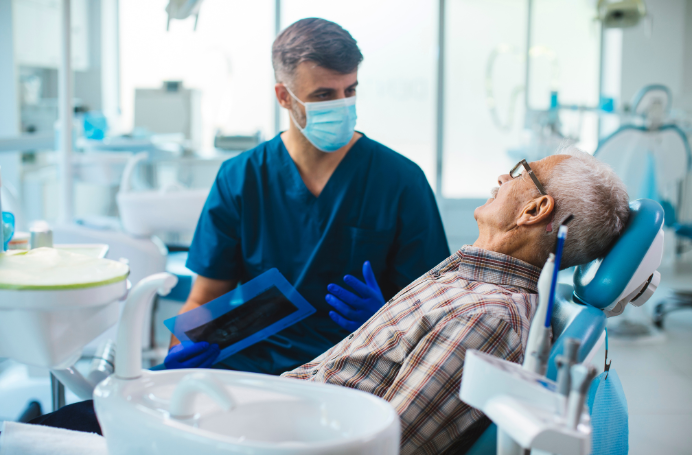
When your dentist examines your mouth, they are looking for changes and potential problems which may need treatment. Regular appointments help to diagnose issues before they become serious. However, there’s a limit to how much can be seen with the naked eye, no matter how thorough the examination.  This is why x-rays are so valuable, they help to see between and inside the teeth where tooth decay (holes) is hidden and commonly occurs.  

Although the enamel on the tooth surface may appear intact, an x-ray can help to pick up signs of decay underneath. X-rays also help to detect problems with the roots of the teeth, changes in the bone, unerupted teeth such as wisdom teeth, infections and if there are issues with the jaw and facial bones.  X-rays also assist with planning for dental care, including fillings, implants, tooth extraction and orthodontics.   

Are dental x-rays safe? 

Absolutely. Modern digital x-rays use very small amounts of radiation to create an image of the teeth and bones of the mouth and are safe for adults and children.  

Radiation is measured in units called ‘Micro-Sieverts’. Walking around each day exposes us natural background radiation of 10 micro-sieverts whilst eating a banana is equivalent to 0.1 micro-sieverts. To put this into perspective, a typical single dental x-rays is equivalent to the natural radiation of eating two bananas.  

If you are pregnant or breastfeeding, let your dentist know before you have any dental examination, including x-rays.  According to health experts, for women who have not had a recent dental check and where there are benefits in having an x-ray, there is no need to defer having one. 1 

When your Dentist look at x-rays, they are looking for subtle changes in how light or dark an area on the x-ray appears to the surrounding area. This tells them if there has been any change in the mineral structure of the teeth and bone. 

What type of dental x-ray would I need? 

The type of x-ray you have will be based on the information your dentist needs.   

  • The most common type is what’s known as ‘Bite wing’ x-rays, which are generally taken at your first visit and then at intervals of between 12-24 months depending on your tooth decay risk factors. 
  • Periapical x-rays help to view the entire tooth, including the roots and surrounding bone.  These types of x-rays are useful for helping to diagnose infections, bone levels, tooth aches or root structures and are required before a tooth is extracted.  
  • Panoramic x-rays, also called a ‘full mouth x-ray’ or OPG, help to visualise the entire mouth, sinuses, bones and jaw and to assess the stages of tooth development in children. They’re also useful to view the wisdom teeth and determine the extent of gum disease. These type of x-rays are typically taken at an initial consultation and every 5 years thereafter. 
  • A lateral cephalometric x-ray which is taken side on, is often done in combination with a full mouth x-ray, and helps to plan orthodontic treatment.  
  • A CBCT or 3D x-rays is taken when your Dentist needs to accurately visualise the structures of the mouth in 3D, for implant planning, orthodontics, or following trauma 


How often should I have my teeth x-rayed? 

Your dentist will advise you about the type and frequency of x-rays required. They aim to minimise the number of x-rays they take. Typically, your dentist will take a set of baseline x-rays such as bitewings, periapicals and OPG’s on your initial visit.  

Additional x-rays such as periapicals may be required if you have a toothache, require an extraction or tooth you are having treatment on a tooth such as a crown or root canal treatment. 

If you have any questions about x-rays or other dental related information, speak with your dentist.  Book an appointment today to discuss your own individual needs and ensure good oral health.  

[1] ADA_OHP_FactSheets_Pregnancy_23052017.pdf.aspx

Let us help you decipher dentist lingo


Many of us have had the experience of sitting in the dentist chair and thinking they’re talking another language. This is because dentists and their dental assistant use dental terminology to describe conditions of the teeth and mouth.  This terminology helps to record accurate information and save time. To patients their words can be confusing – until now.   

Read on to understand more about the terminology dentists use and what it all means. And importantly, don’t hesitate to ask your dentist or dental assistant to explain what they’re saying.    

Your mouth is divided into quadrants 

Dentists divide your mouth into four separate regions known as quadrants. The upper part of your mouth forms the first two quadrants and the lower part of your mouth the third and fourth quadrants.  Working clockwise, your top right side is quadrant 1, top left is 2, lower left is 3 and lower right is 4.  Each tooth also has it’s own individual identifying number, for example, tooth #1 is your front tooth, working backwards into the mouth, your next tooth is #2 and this continues up to tooth #8, if you have all of your teeth present in that quadrant. When your dentist is examining your teeth, they will often call out two numbers.  

Why so many teeth? 

You may hear your dentist name your teeth as incisors, canines, premolars and molars, or third molars (wisdom teeth). Each of your teeth serves a special function to bite, grind and soften food so it’s safe to swallow.    

It’s not only numbers which are code for your teeth and where they are located, your dentist will also use number and word combinations to describe what they’re seeing. For example, you may hear them say words like, mesial (closest to the front of the mouth), lateral (side), incisal (cutting side) distal (closer to the back of the mouth) which are commonly used to explain which portion of a tooth they’re examining.   

When a tooth has had previous treatment, there is also a special way of relating what’s been done.  Restorations may be described as being made from composite, resin or amalgam. When a tooth is missing, decayed or filled, your dentist will also describe the condition of any restorations and if they are still in good condition or need replacing.  

Handy dental terms  

  • Bruxism – clenching or grinding your teeth 
  • Root canal therapy – the removal of infection from a tooth 
  • Crown – made of strong dental material such as porcelain or metal to cover the entire tooth -like a crash helmet for a damaged tooth 
  • Occlusal splint – a night guard worn if you’re clenching and grinding 
  • Dental implant – a replacement for a missing tooth root in your jaw bone made from pure titanium . Used to anchor a new crown, bridge or denture 
  • IV sedation – known as ‘twilight or sleep dentistry’  
  • Abscess – acute or chronic infection in the gum or tooth 
  • Bridge – a procedure to replace one or more missing teeth using the teeth either side of the gap to hold it in permanently in place 
  • Calculus – another word for tartar, which is is a hard mineral deposit on the tooth surface  
  • Canine teeth – also known as the eye teeth used for slicing and tearing into food. There are two canines in the upper and lower jaws 
  • Tooth Decay – also known as holes or cavities. This is the result of tooth enamel and dentine becoming soft and infected by bacteria in the mouth 
  • Dentine – the yellowish tissue that makes up most of a tooth, located beneath the enamel which is the white, hard outer layer  
  • Dentures – false teeth made of acrylic or metal; can be complete (replacing all teeth) or partial (filling in spaces left by missing teeth) 
  • Enamel – the white part of the tooth you can see above the gums. It is the hardest substance in the body 
  • Erosion – the loss of tooth enamel due to acid attack 
  • Filling – used to replace lost tooth structure following tooth decay, erosion, fracture or trauma. Commonly made from tooth coloured materials such as composite resin 
  • Fluoride – a natural mineral found in toothpaste and water that strengthens tooth enamel and prevents decay 
  • Gingivitis – an early form of gum disease characterised by inflamed or bleeding gums as a result of plaque bacteria build-up along the gum line 
  • Hygienist – a dental practitioner specialising in the prevention of dental disease and the promotion of good oral health 
  • Incisor – a front tooth used for slicing into food. There are 4 incisors in the upper and lower jaws 
  • Mandible – the lower jaw 
  • Maxilla – the upper jaw 
  • Molar – teeth used for grinding, located on both sides of the jaw. There are up to 6 molars in the upper and lower jaws 
  • Orthodontist – a dental professional who specialises in dental and facial irregularities such as crooked teeth and mismatched bites 
  • Periodontal disease – an advanced gum disease which may occur if gingivitis isn’t treated 
  • Periodontal ligament – tissue that separates the tooth from the bone socket, and anchors the tooth to the bone 
  • Plaque – a soft, sticky substance comprised of bacteria and similar substances that build up on teeth 
  • Premolars – teeth with a flat biting surface, used for tearing and crushing food. There are 4 premolars in the upper and lower jaws 
  • Pulp – the living tissue at the centre of each tooth containing nerves, blood vessels and connective tissue 
  • Scaling – the process of removing harmful substances such as plaque, tartar and stain from teeth 
  • Sealant – a material applied to biting surfaces of newly erupted back teeth to prevent cavities forming 
  • Tartar – when plaque isn’t cleaned away, it can harden into tartar. Dentists will also sometimes call this calculus 
  • Veneer – a thin layer of material made to cover the front surface of a tooth to improve its appearance or position 


Book an appointment with your dentist to put your new knowledge into practice. You may want to ask them how your 13 is looking!