The riskiest Christmas treats for your smile
One of the great cataclysmic events of living in the southern hemisphere would have to be summer and the festive season colliding with an annual holiday break. What a fantastic time of the year.
The anticipation of a well-earned break from work and school intensifies dramatically, and for households that celebrate Christmas, the atmosphere becomes electric. This is particularly true when energetic young children are part of the mix.
With the holiday season comes a change-up in available food groups. These all somehow taste so much better in summer than at any other time of the year. We are talking ice-cream, summer stone fruits like cherries, ham-off-the-bone, pineapple, icy cold fruit-based drinks and barbecued seafood. The quintessential taste of Australian summer.
Take this as a fair warning of the great ‘Christmas Crunch’, where the most appetising summer snack can turn into the season’s most deceptively dangerous treat. Food would be the number one culprit for tooth damage such as a cracked tooth or dislodged filling or crown.
Teeth have hard times ahead
Here is the nib Dental list of festive food items that can quickly turn into an unwelcome dental problem:
- Candy Canes
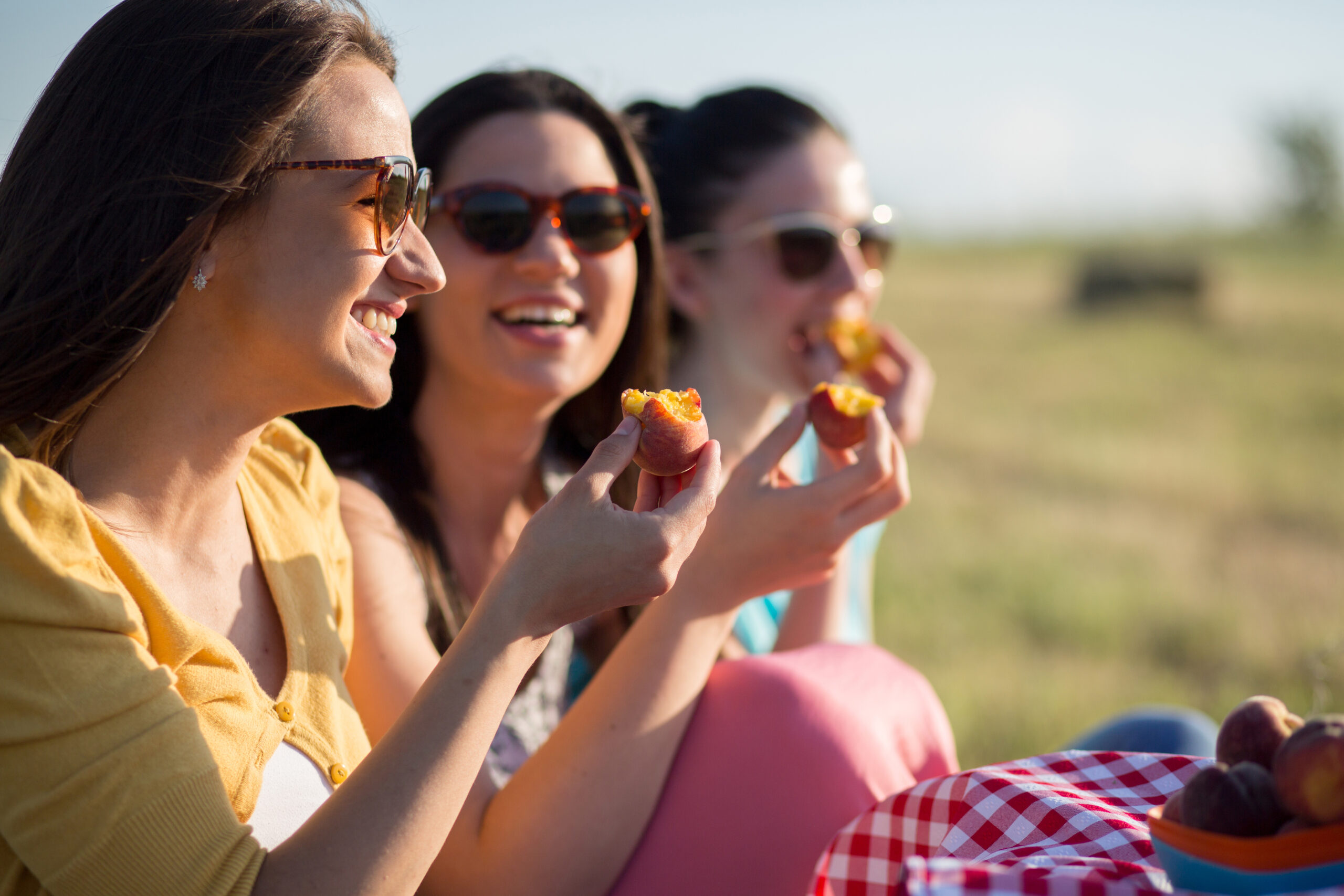
- Summer stone fruit
- Nuts
- Ice blocks
- Christmas Pudding coins
On the surface, these summer snacks are very appealing but come with a real dental double-edged sword. Learn how to approach these foods through a lens of safety and concern for your overall dental health.
Candy canes
Candy canes are rock-hard because of how the sugar forms crystals when the candy is made. The sugar molecules lock together in a rigid pattern, which happens when there’s lots of sugar, combined with the mixing of ingredients and the temperature changes when the candy is made.
And we should also mention the pointed edges of the candy stick that can dig into your gums and cause pain and other issues.
Here’s a candy cane hack that can help take some of the stress off your teeth. You can soften candy canes by using a microwave or putting them in a low oven until the candy reaches an ideal texture to chew safely.
Of course, that hardness of candy is one issue, there is also the unmentioned sugar content. While we recommend avoiding sugar for your oral health, if you can’t resist sweets this holiday season a good 2-minute brushing afterwards can help wash away the acid build up on your teeth and help prevent decay.
Summer stone fruit
One of the most mouth-watering and delicious tastes of summer would have to be stone fruits. It’s hard to resist those juicy, ripe and plump cherries, peaches, apricots, nectarines, plums and mangoes.
And yes, mango is a stone fruit, its core is a lot larger than most stone fruits and probably doesn’t scream oral danger. The smaller the pit the more risk to your teeth and jaw. We are looking at you, cherry! Cherries are dressed up in a shiny dark maroon exterior, but just beyond the fleshy delights is one of teeth’s true nemesis. Pierce the fruit too far with your teeth and you will know all about it, when you hit that hard-as-concrete cherry-pit.
Now, let’s not victimise the cherry alone, other stone fruits, like the plum and apricot should also be treated with respect and care. That goes for any soft fruit that you excitedly bite into that has a hard stone or pit lying hidden under the surface, as well as olives. Take care even when eating pitted olives or fruits as some remnants of the seed could be just the surprise you don’t want.
Nuts
This a pre-warning of an imminent dad joke. Here it comes, ready or nut! Nuts can be a real mixed bag during the festive season!! Thank goodness nuts now come pre-packaged, and all the hard work has been done. For those born in the post-internet age, there was a time when all nuts came in their shells and had to be cracked open with specialised tools, like a nutcracker or a hammer, which presented another set of dangerous medical circumstances.
Whenever you eat nuts, you should chew them slowly and carefully, certainly don’t bite down hard on a Macadamia nut. Chewing hard nuts increases the risk of cracking a tooth or dislodging a filling or crown. Please, just take care.
We have ranked five of the toughest on the ‘hard nut’ scale:
- Macadamia
- Almonds
- Brazil
- Hazelnuts
- Pecans
As nuts age, they lose moisture content, which causes the nut to become drier and harder. This is a natural process, but it can be slowed down by storing nuts in an air-tight container and out of bright light.
You can also soften nuts for safe consumption with the following instructions:
- Place the hard nuts in a bowl
- Cover them with water
- Let them soak overnight
- Rinse the nuts with fresh water
- Pat the nuts dry with a paper towel
Soaking nuts in water helps to rehydrate them, making them softer and easier on your teeth.
If you do accidentally chip, crack or stress your teeth anytime during summer, please get the issue checked as soon as possible by making an appointment to see your local nib Dental.
Ice blocks
Nothing says a festive summer as much as a brightly coloured cocktail in a large glass with lots of ice blocks and a decorative umbrella.
Whether you are into Aperol spritz, a cranberry and pineapple juice or a mocktail, these drinks all have something in common. When the temperature is hot, you need to cool your drinks down with lots of ice. The cold hard truth is that you should never crunch down on ice cubes or cylinders with your teeth.
The top four ice related issues:
Cracked or chipped teeth – The sheer hardness of frozen water (ice) can chip or crack teeth
Damage fillings and crowns – Chewing ice may break or loosen existing dental work
Tooth sensitivity – Cold ice exposure increases sensitivity that causes discomfort
Enamel erosion – Regular sucking on ice can gradually wear away protective enamel
Christmas pudding coins
Adding coins into the traditional plum pudding seems a little strange, but it is a fun Christmas tradition favoured by Nana’s all over Australia.
The idea being that whoever finds the coin amongst their pudding and custard will have good luck. The tradition goes back to the early 1300s, when several small items like dried peas and chicken wishbones were added to the pudding mixture. We admit that last bit really doesn’t sound all that fun.
Over the years, the custom evolved, and Aussies were expected to add several coins to spread the luck around.
While following your grandparents olde world Christmas customs seem charming, Nana can go from hero to zero with one unsuspecting spoonful of pudding. All it takes is for a loved family member to crunch down on that hidden coin and then drama ensues as a tooth injury presents a very dental Christmas.
Emergency help is close by
When a dental accident occurs over the holiday break, we suggest you immediately make a booking to see a nib Dental dentist as soon as possible. Over the holiday period, you can use our emergency appointment finder to book an appointment at any one of our 110+ centres. With our single patient record, your details will be seamlessly handed over to the practitioner who treats your oral emergency.
Sugar pie, honey bunch
While we have covered off several risky summer food items to chew, let’s touch on the sugar-laced treats, like chocolates, cranberry sauce, mince pies, wine, lollies and soft drinks.
Did you know a single mince pie can contain as much sugar as you’d find in a medium-sized chocolate bar, making them one of the most sugar-dense Christmas foods.
Moderation is key in the consumption of sugary foods over the holiday break and remember to floss and brush your teeth for at least two minutes twice a day.
Oh no! I’ve cracked my tooth – what to do next?
We understand that patients who are genuinely in a dental emergency need priority attention. That’s why we try to keep some space available in the appointment books every day for patients requiring an emergency dentist.
At nib Dental most of your dentists are available six days a week, with many of our clinics open Sundays, evenings and public holidays. Making it easier for you to get an emergency appointment when you need one.